By: Ismael Kasooha
Kampala
President Yoweri Museveni has called on all Ugandans to take lead in preserving wetlands for posterity as Uganda joined the rest of the world to mark world Wetlands Day.
Prime Minister Rt. Hon. Nabbanja Robinah Launches the National Wetland Strategic plan during the World Wetlands Day celebrations at Bugolobi in Kampala
“These ecosystems are important for water purification; and act as habitats for a wide range of wildlife, such as birds, fish, plants and amphibians. In the absence of wetlands, key sectors, like agriculture, fisheries, tourism, the craft industry and hydropower generation would be negatively impacted,” noted Museveni.
He emphasized that for generations, wetlands had shaped the people’s customs, beliefs and ways of life.
“Across Uganda, wetlands have been protected as sacred sites and cultural landscapes. Over the years, cultural norms and taboos regulated access and prevented overuse of these ecosystems. It is evident that long before modern environmental laws, our elders understood and practiced the principle of wise use,” the president observed.
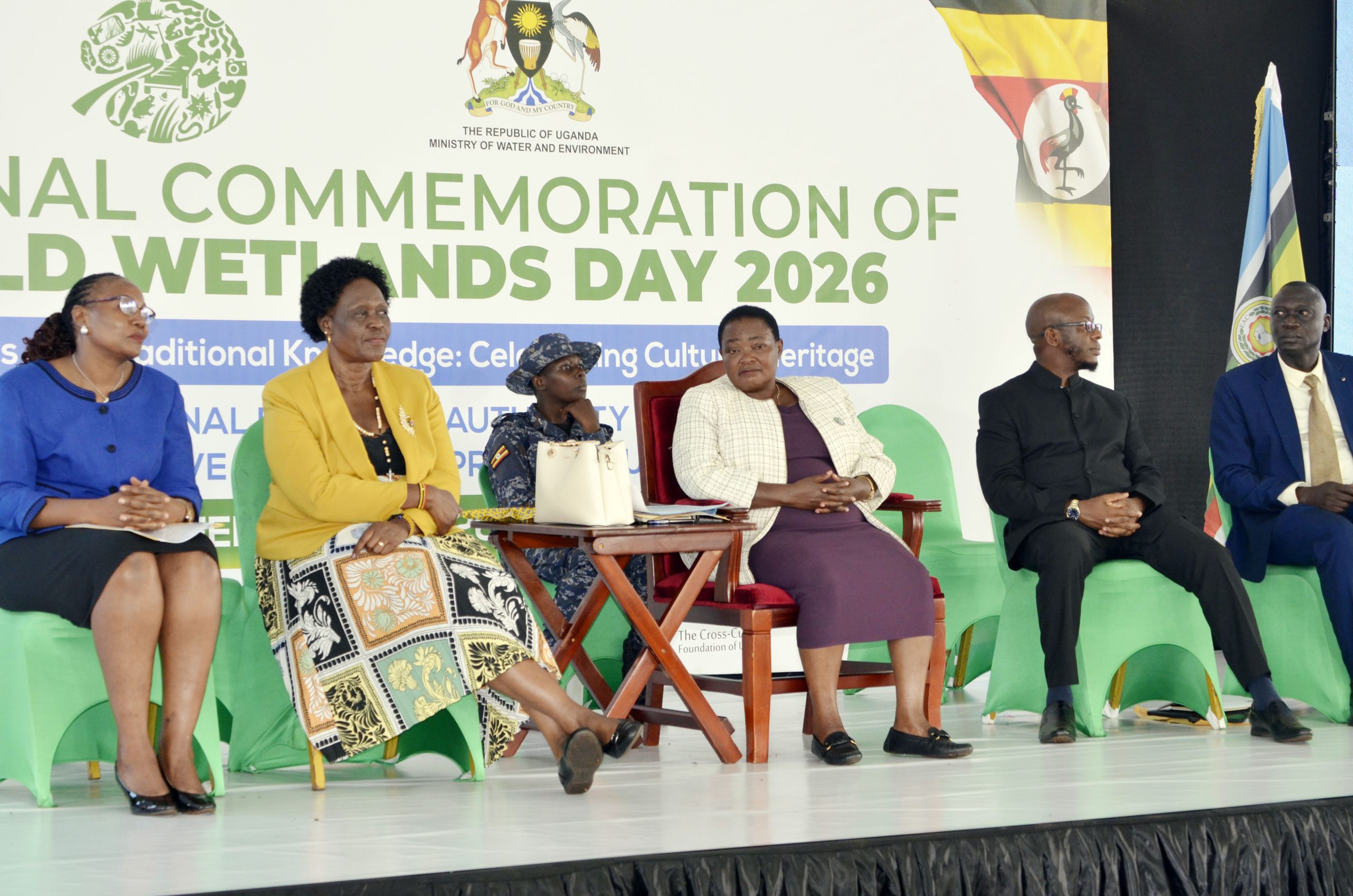
The remarks were contained in the President’s speech delivered for him by the Rt. Hon. Nabbanja Robinah the Prime Minister of Uganda at the National Forestry Authority (NFA) offices in Bugolobi, Kampala.
In 1994 the wetland cover stood at 15 percent but this has been declining to 8.9 percent by 2024.
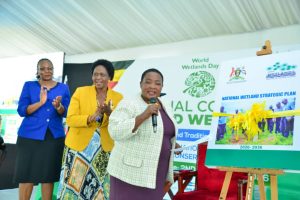
The Premier launching the 10 year strategic Wetlands plan
However, the government intensified efforts to reclaim the degraded wetlands and by 2025, Uganda’s wetlands cover recovered from 8.9 percent to now 9.3 percent.
Museveni recognized the role traditional leaders play in preserving the ecosystem and called upon all Ugandans to take lead in preserving the wetlands.
He said that the NRM government remained committed to the conservation, sustainable use and management of wetlands.
Museveni explained that the commitment had been expressed through the restoration programmes, enhanced enforcement and community engagement efforts and the development of the National Wetland Sector Strategic Plan to guide all conservation efforts.
“As we celebrate World Wetlands Day – 2026, I urge all the stakeholders to reflect on their actions and strive to make a positive contribution towards wetlands conservation. Protecting these wetlands not only means protecting the ecosystems but our cultural heritage, identity and social cohesion. Let us take collective responsibility to raise awareness, restore degraded wetlands, promote sustainable land use practices and adopt proper waste disposal practices,” the president Emphasized.
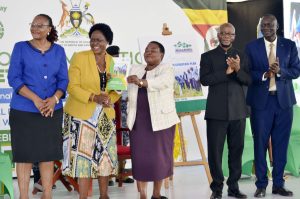
The Prime Minister Rt. Hon. Nabbanja Robinah displays the 10 year strategic plan for wetlands restoration during the World Wetlands Day celebrations at NFA offices in Kampala
Museveni thanked Development Partners, Cultural institutions, the private sector, academia, civil society organizations and the local communities without whom the conservation of wetlands would have been an uphill task adding that this demonstrated the value they attached to Uganda’s wetland ecosystems.
The Premier unveiled the National Wetland Strategic Plan 2026–2036, reinforcing the government’s commitment to protecting wetlands amid threats from encroachment, degradation, and climate change.
The Minister of State for Environment, Beatrice Atim Anywar said environmental conservation had been mainstreamed across national development frameworks, including Vision 2040. She cited interventions such as the 2011 establishment of the Environmental Protection Police Unit, the 2014 cancellation of illegal wetland land titles, and ongoing wetland restoration and boundary demarcation efforts.
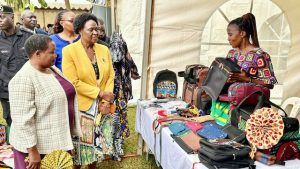
The Premier inspecting stalls during the world Wetlands Day commemorations at Bugolobi in Kampala
Anywar also announced a 10-year Environment and Natural Resources Restoration Action Plan aligned with the UN Decade on Ecosystem Restoration to accelerate nationwide wetland recovery.
Cultural and traditional leaders asked the government to involve them in wetland conservation efforts because they are directly linked to the people who destroy these wetlands.
A number of Kingdoms and cultural institutions were represented at the function including Buganda Kingdom, the Acholi, Iteso, Baruli among others.
This year’s World Wetlands day is marked under the Theme “Wetlands and traditional knowledge celebrating cultural heritage”.
End