By: Ismael Kasooha
KAMPALA
The Swedish Government has committed to extend development assistance to Uganda worth USD160 Million approximately 576 billion Uganda shillings for the next five years.
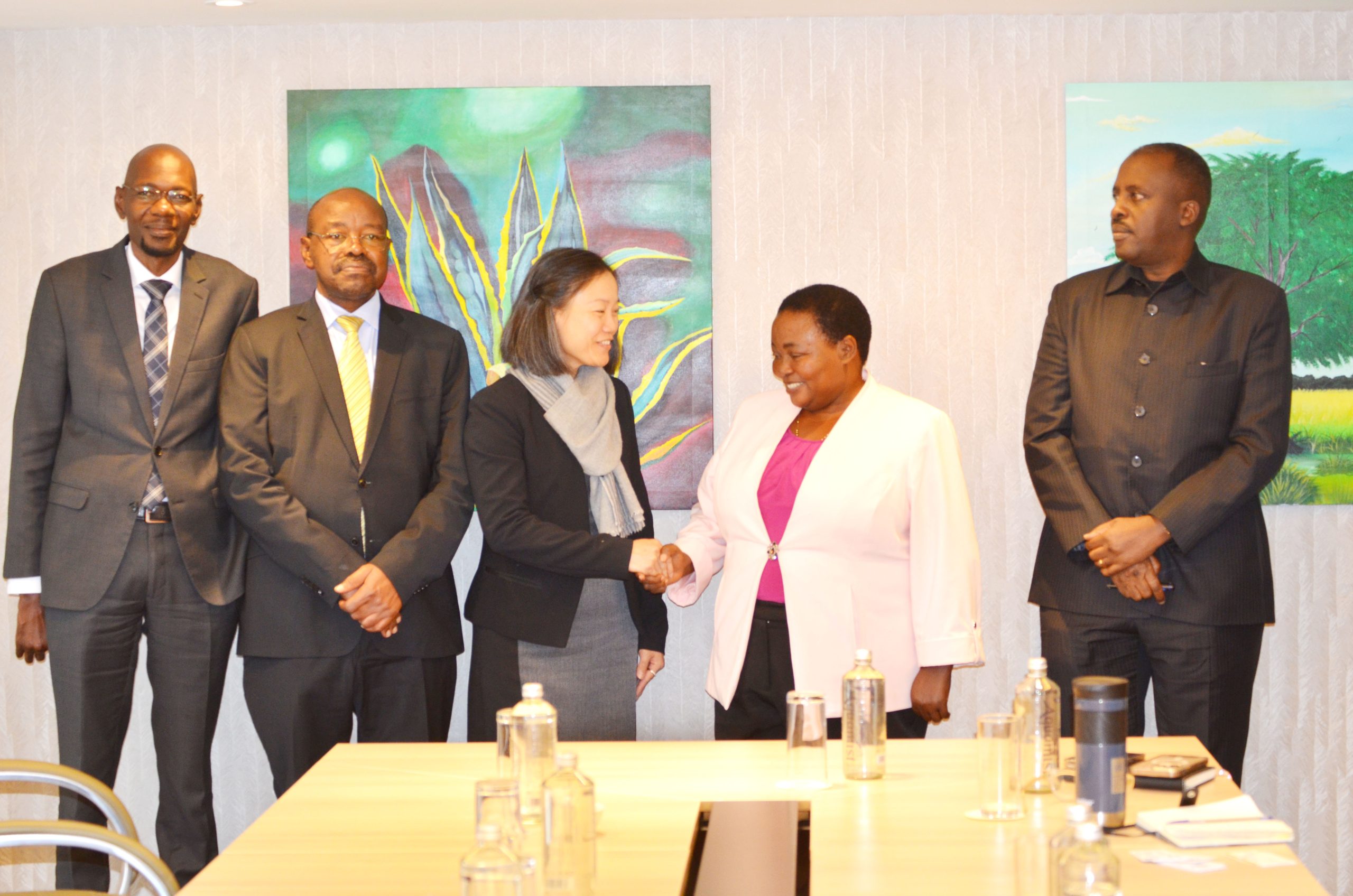
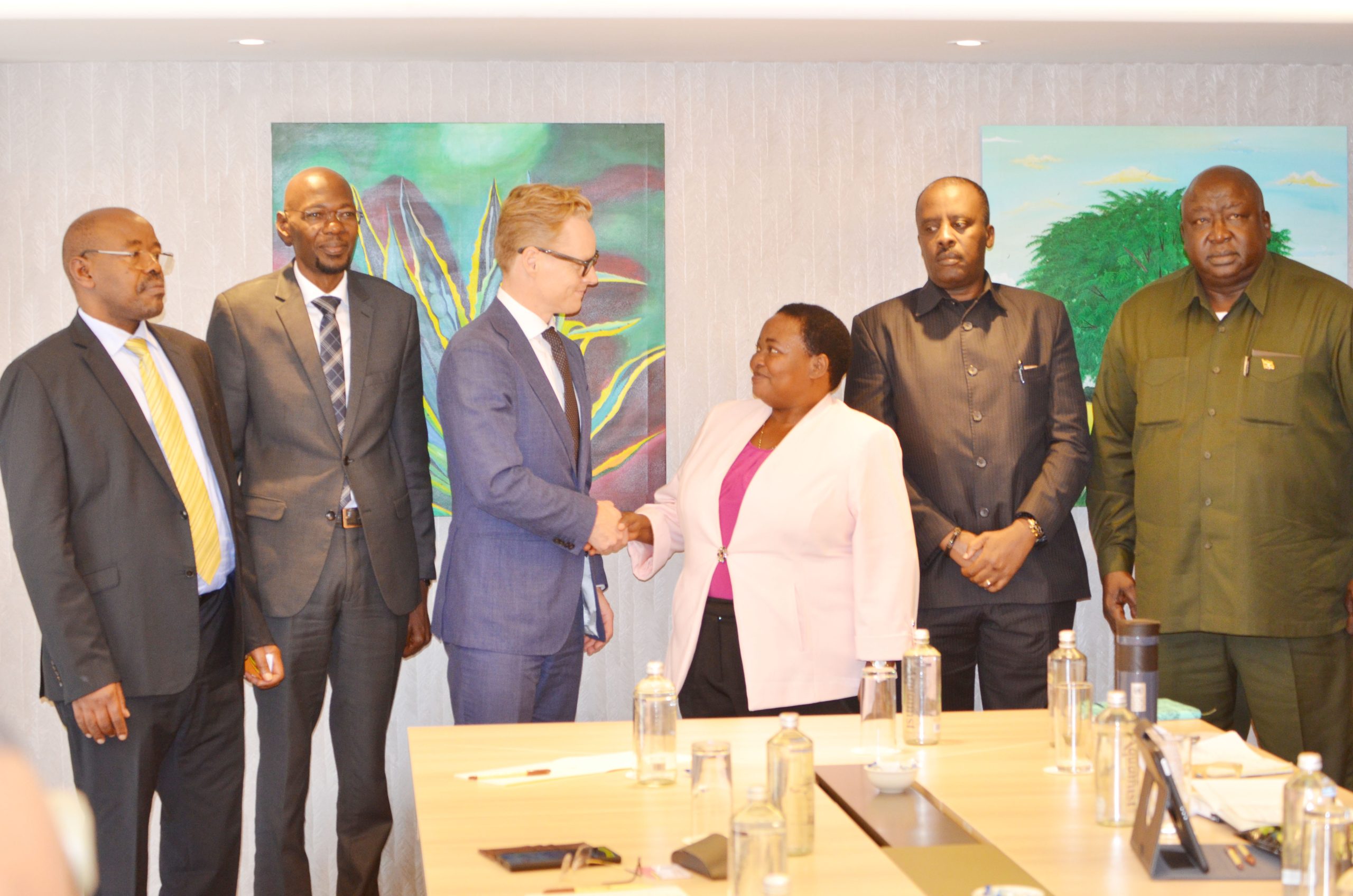
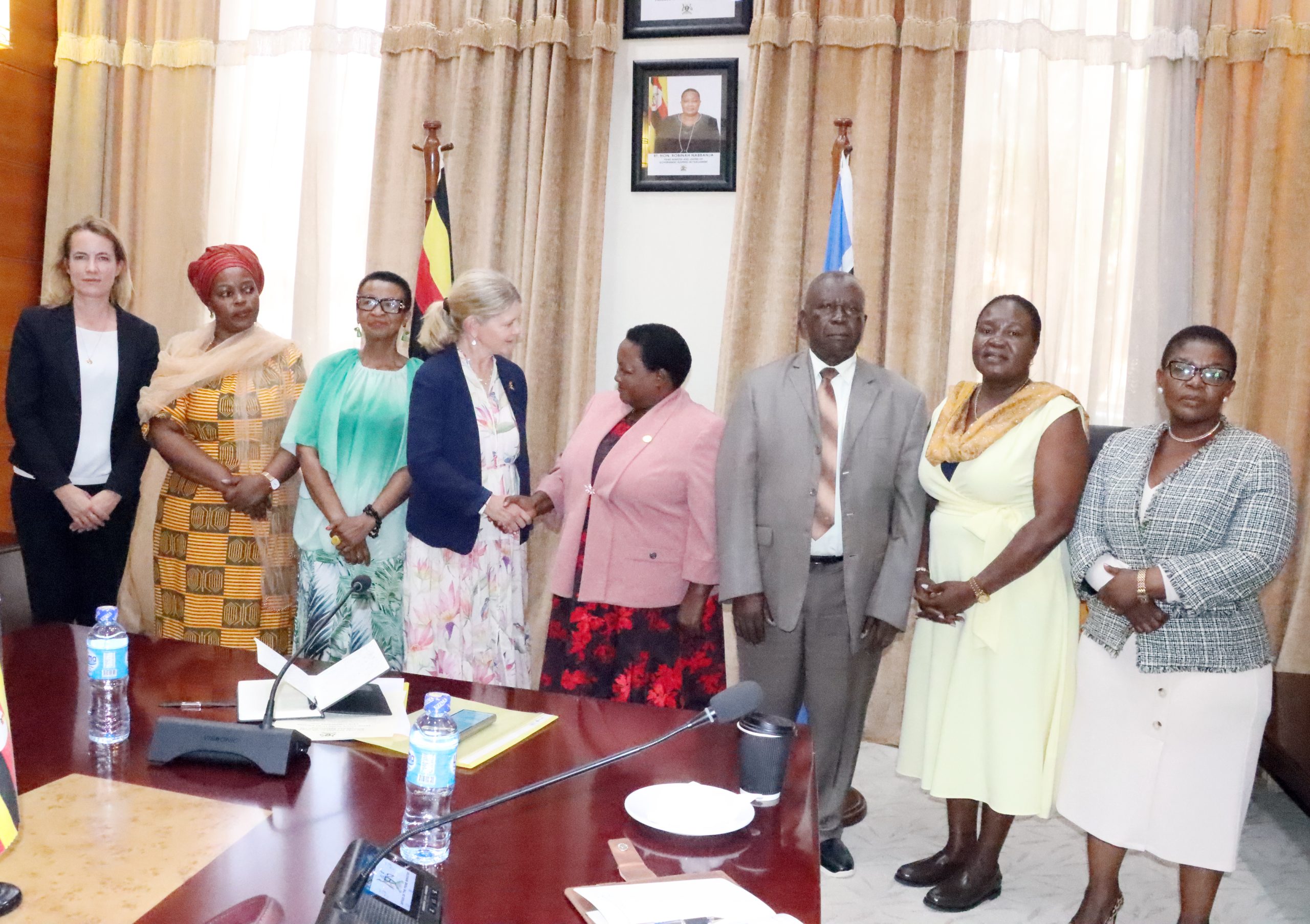
This was revealed by the Swedish Ambassador to Uganda Her Excellency Maria Hakansson during a courtesy call to the Prime Minister of Uganda, Rt. Hon. Nabbanja Robinah, at her office in Kampala.
“Our countries enjoy excellent, longstanding relations and I know that many Ugandans have a personal connection to Sweden. They have lived, worked or studied in our country, and this includes the first family (lived outside Gothenburg 1983 – 1986). I can assure you that we will continue working to strengthen the bond between the people of Sweden and Uganda,” said Hakansson.
Hakansson said that Sweden and Uganda also have a partnership for development dating back to the late 1980s.
“I am pleased to inform you that my Government has adopted a new five-year bilateral strategy for our development cooperation with Uganda (2025 – 2029), with a total commitment of 160m USD,” she said.
Hakansson assured the Prime Minister that Sweden would continue to contribute to Uganda’s journey from poverty to economic growth and prosperity in line with the National Development Plan in important areas such as improving health for the most vulnerable, increasing resilience to climate change, promoting democracy and good governance, and strengthening sustainable trade that contributes to job creation.
She said that the visit by Swedish Minister for International Development Cooperation and Trade (Mr Benjamin Dousa) in March when he met with H.E the President and visited to West Nile was positive.
“Uganda is an important country for the regional stability of East Africa. This includes its contributions to the African Union’s peace and security efforts through measures such as providing troops. Uganda is also Africa’s largest recipient of refugees in terms of numbers. The country’s progressive refugee legislation makes it possible for refugees to get established in host communities,” she noted.
The objective of Sweden’s International Development Assistance is to create conditions to improve the lives of people living in poverty and oppression according to Sweden’s development strategy. Hakansson added that the challenges the world faces today require an approach based on respect of international law and the UN Charter.
“Uganda has an important role to play in this regard, as Chair of NAM. You may know that both Sweden and Uganda serve at the board of UN Women this year, another area with potential for enhanced collaboration also in multilateral forums. I believe Uganda and Sweden share a strong interest in advancing rights of women and girls,” she observed.
Hakansson welcomed Uganda’s emphasis on regional integration and stability and was grateful for Uganda’s efforts in peacekeeping (Somalia) and in combating terrorism in the region, including through bilateral operations in Eastern DRC against ADF.
On the issue of Refugees, Hakansson lauded Uganda for hosting millions of people who run from their countries seeking refuge in Uganda.
“In challenging times, I am impressed by the role Uganda is playing, by providing a safe haven to more refugees than any other country on the continent. A large segment of Sweden’s support to Uganda is directed to refugee-hosting areas, benefitting both host communities and refugees. Sweden is also a major donor of core support to several UN organizations active in the refugee response in Uganda,” she said.
Hakansson said that trade was an important priority in enhancing synergies between development cooperation, international trade and a private sector-led growth.
“Swedish companies such as Ericsson and ABB are already contributing positively to Uganda’s socio-economic development, but we wish to further expand the trade between our countries. Swedish companies are at the forefront of new technologies in the context of the global green transition and can offer high quality solutions that could help unlock the potential in the Ugandan energy sector, transport (including railway), mining, forestry and digitalization,” she said.
She was happy to note that Uganda and Sweden have agreed to renew and extend the Memorandum of Understanding (MoU) on energy cooperation for another three years.
“We see strong potential in several projects under this MoU. Next week, we will have the Sweden Uganda Energy Working Group meeting that will be co-chaired by the PS Ministry of Energy Eng Batebe and myself to set out our energy priorities and chart a way to collaborate these coming years,” Hakansson said.
She briefed the Prime Minister that another key project of the 400kVKaruma–Tororo Transmission Line and Associated Substations, including the 132/133 kV Ntinda Substation will be built by Swedish company Kalpataru Power Transmission Sweden AB.
“We know that this project has been cleared by the Ministry of Energy and Ministry of Finance, but requires your office’s clearance before being submitted to Cabinet. At this point, every key stakeholder is on board, including our Export Credit Agency EKN which has now approved this project financing, “said Hakansson.
She explained that increased railway connectivity and the SGR is another important sector for Sweden where they seek to engage and contribute with Swedish resources.
“Swedish companies have cutting edge solutions also in the railway sector. Based on Sweden’s track record in delivering state of the art solutions to the Tanzania SGR project, Swedish companies and Team Sweden are well situated to be close partners with Uganda also in the Malaba – Kampala SGR project,” noted Hakansson.
The Prime Minister Robinah Nabbanja lauded the Swedish Government for its continued support of Uganda as a good development partner.
“On behalf of the Government of Uganda and H.E the President of the Republic of Uganda, I want to thank you for the continued support extended to us as a country,” said Nabbanja.
She appealed to the Swedish Government to support Uganda more in hosting the ever increasing numbers of Refugees in the country.
Currently Uganda is hosting over 1.94m Refugees yet the support from development partners is dwindling.
“We need to have more sustainable alternatives in hosting Refugees instead of relying on handouts. We need to empower the refugees to be self-reliant because the support channeled to refugees has drastically gone down,” noted Nabbanja.
The meeting was attended by the Minister for General Duties in the Office of the Prime Minister, Rt. Hon. Kasule Lumumba, the Minister for Energy and Mineral Development, Dr. Ruth Nankabirwa, the Minister for Public Service Muruli Mukasa, Minister of State for Karamoja Affairs, Florence Nambozo, state Minister for Health, Hanifah Kawooya and technical staff.
End