By: Ismael Kasooha
KAPEEKA
President Yoweri Museveni has stressed the role played by industrial parks in the socio-economic transformation of the country.
In his message delivered for him by the Rt. Hon. Nabbanja Robinah, the Prime Minister of Uganda, the President appealed to Ugandans to form joint ventures to tap into the available opportunities.
“I encourage our local entrepreneurs to seize the opportunities presented by the industrial parks to scale up their businesses and engage in joint ventures with our international partners. The Government will continue to promote the Buy Uganda, Build Uganda (BUBU) policy, which prioritizes local content and strengthens our manufacturing base,” noted the President.
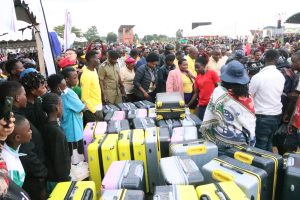
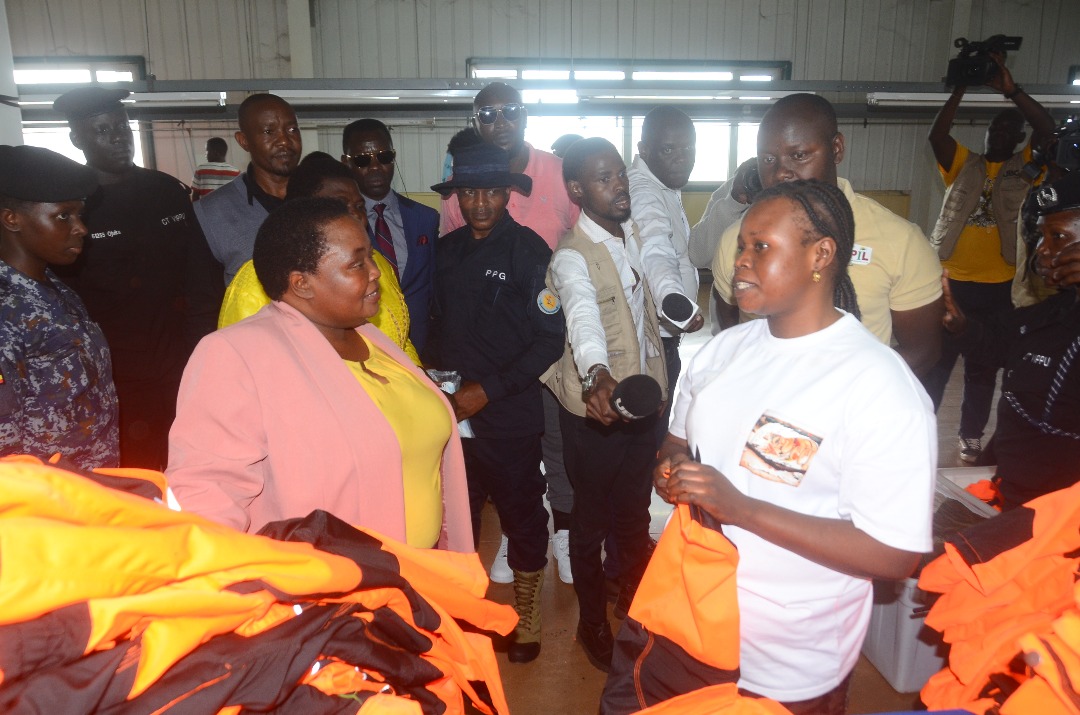
The Prime Minister Rt. Hon. Nabbanja Robinah in Pink jacket inspecting stalls at Kapeeka grounds in Nakaseke District
Museveni thanked all the manufacturers, investors and entrepreneurs, for taking part in the 2nd Namunkekera – Kapeeka Industrial Park Trade Show and Baazar that took place at Kapeeka Industrial grounds in Nakaseke District.
The president noted that the Industrial Park had not only fostered local manufacturing and industrialization; but also created opportunities for employment and technology transfer.
“The NRM government is committed to the goal of transitioning Uganda to middle-income status, through prioritizing value addition, export promotion and reducing reliance on imports,” the message read in part.
He further explained that one of the Third World’s biggest problems was not the absence of natural resources, but the absence of technology.
He said that previously, people all over the world lived in poverty and backwardness because of lack of industries adding that all the big inventions that had liberated man from poverty, backwardness and want are relatively recent.
“The steam engine was only invented in the eighteenth century and penicillin was not discovered until the 1940s. So, these miracles of machines, chemicals, rockets and energy are not very ancient. However, they have completely transformed people’s lives and alleviated the burdens of manual labour,” he noted.
Museveni said that there was no way that Africans could emancipate themselves from backwardness without carrying out an industrial revolution.
“In order to achieve Uganda’s industrial revolution, the NRM government has prioritized infrastructure development in the key areas of transport and energy. This has had the effect of lowering the costs of doing business in Uganda,” he said.
Museveni explained that there were four major cost pushers in business: high cost of electricity, transport, money and labour.
“If these four are high, then businesses cannot grow. Business is about profits. When you make profits, the business grows and in order to make profits, you must minimize the costs,” he emphasized.
The President stressed that their deliberate move to prioritize infrastructure development was aimed at creating a strong economic base to attract investment in the four sectors of commercial agriculture, industries, services and ICT.
“The dividends of this correct strategy are evident across the country. Factories have increased across the country. Industrial parks have been established in all the regions of Uganda. Agricultural production has increased to create surpluses for some commodities,” he said.
The President expressed that he was confident that the collaborations formed at the event would unlock more opportunities for investment, growth and development across Uganda.
“Let us all work together to transform Uganda into a modern and industrial economy, capable of guaranteeing the prosperity and wellbeing of our people,” Museveni noted.
End