By: Ismael Kasooha
MUNYONYO
The Prime Minister Rt. Hon. Robinah Nabbanja has assured Local Government leaders and stakeholders that the NRM government is committed to supporting local governments for the country to achieve its 2040 agenda.
“Building the capacity of Local Governments remains our priority. We must support them to Develop integrated regional development plans, induct and train new local leaders after the 2026 general elections, construct administrative offices where none exist and increase support for affirmative action programmes. Enhancing local revenue mobilization, implementing and monitoring projects effectively; and promoting transparency and accountability in public resource management,” Nabbanja emphasized.
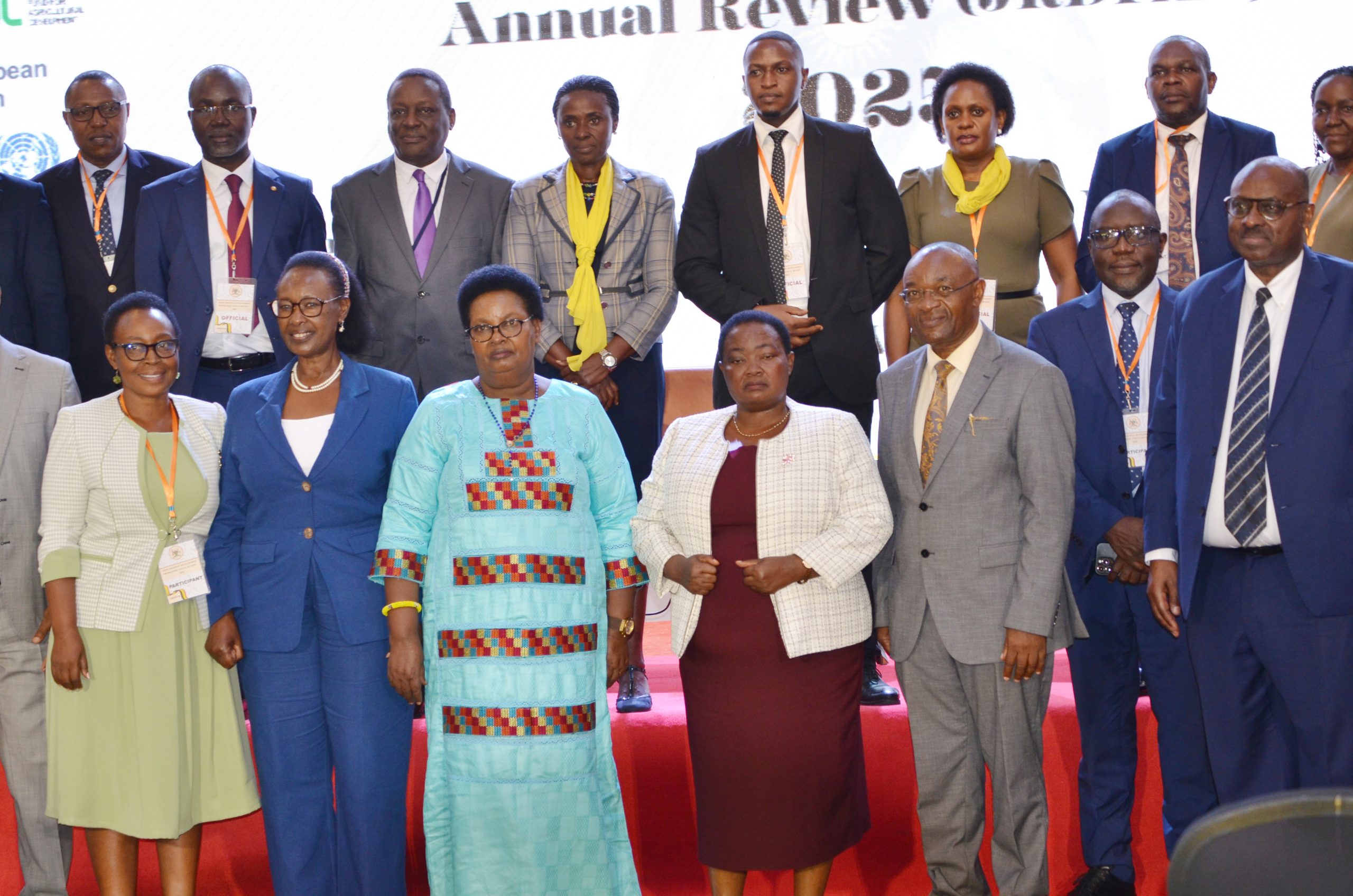
Nabbanja made the assurance on Thursday while presiding over the opening of the Joint Regional Development Programme Annual Review taking place at Munyonyo Conference Center.
“I’m pleased to join you for the first Joint Regional Development Programme Annual Review. This review presents an opportunity to assess our progress towards achieving equitable growth and sustainable development across Uganda’s diverse regions,” said Nabbanja.
She said that it is an important platform to strengthen collaboration, share lessons, reflect on challenges, and reaffirm shared commitment to improving the quality of life for all Ugandans – regardless of where they live in our country.
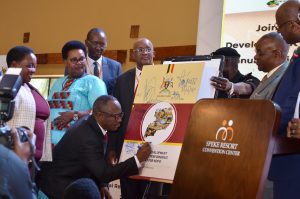
A member of the Civil Society Organisations signs the Report as the Premier and other Ministers witness
Nabbanja said that the NRM government aims at supporting broad-based wealth creation, strengthening local economic development, and ensuring fair distribution of investments and infrastructure, particularly targeting regions that are still lagging behind.
She said that this approach aligns with National and International development frameworks, including Vision 2040, Agenda 2030, the EAC Vision 2050, and African Agenda 2063.
“The NRM Government will intensify efforts to foster Public-Private Partnerships to mobilise additional resources and support innovation for Regional Development. We will prioritise programmes that promote youth inclusion, women’s economic empowerment, and social protection for marginalised groups. We will also enhance multi-sectoral coordination across agriculture, health, education, infrastructure, and environmental management to promote comprehensive and sustainable regional transformation,” noted Nabbanja.
Nabbanja further said that climate resilience remains a pressing concern, particularly for drought-prone areas like Karamoja and parts of Eastern Uganda.
“As you are aware, climate resilience remains a pressing concern, particularly for drought-prone areas like Karamoja and parts of Eastern Uganda. We must invest in adaptive agricultural technologies, water harvesting, and climate-smart infrastructure to safeguard livelihoods and build resilient communities,” she noted.
The Premier appreciated the Development Partners for their continued commitment to advancing Sustainable and inclusive Development across our regions. “We value your technical support, financial contributions, and expertise,” she said.
The Minister for Local Government, Hon. Raphael Magyezi briefed the Conference on the achievements of the Local Government Ministry but also highlighted a few challenges affecting effective service delivery.
The Executive Director of the Civil Society Budget Advocacy Group (CSBAG) is Julius Mukunda, on behalf of the Civil society Organisations, hailed the government for coming up with interventions to streamline service delivery in Local Governments.
Mukunda suggested to the government a number of solutions to challenges facing local governments.
On the issue of government land grabbing, Mukunda said that the majority of government land is not titled, giving the land grabbers an opportunity to steal the land.
Local leaders, especially LC V chairpersons, highlighted a number of hiccups that hinder effective service delivery.
The Permanent Secretary in the Ministry of Local Government Ben Kumumanya outlined the priorities of the Ministry to improve service delivery.
The conference was held under the theme, ‘deepening democratization to improve service delivery‘.
End