By: Ismael Kasooha
QATAR
President Yoweri Museveni has asked developing countries to refocus on development approaches as the world undergoes major structural reforms, with Official Development Assistance declining.
“Today’s global reality demands that countries do much with less. African nations, including Uganda, are pursuing transformative measures to empower citizens — such as youth neighborhood initiatives, women’s entrepreneurship funds, small-business recovery support and social grants for the elderly,” noted Museveni.
Rt. Hon. Nabbanja Robinah addressing the second world summit for social development in Doha
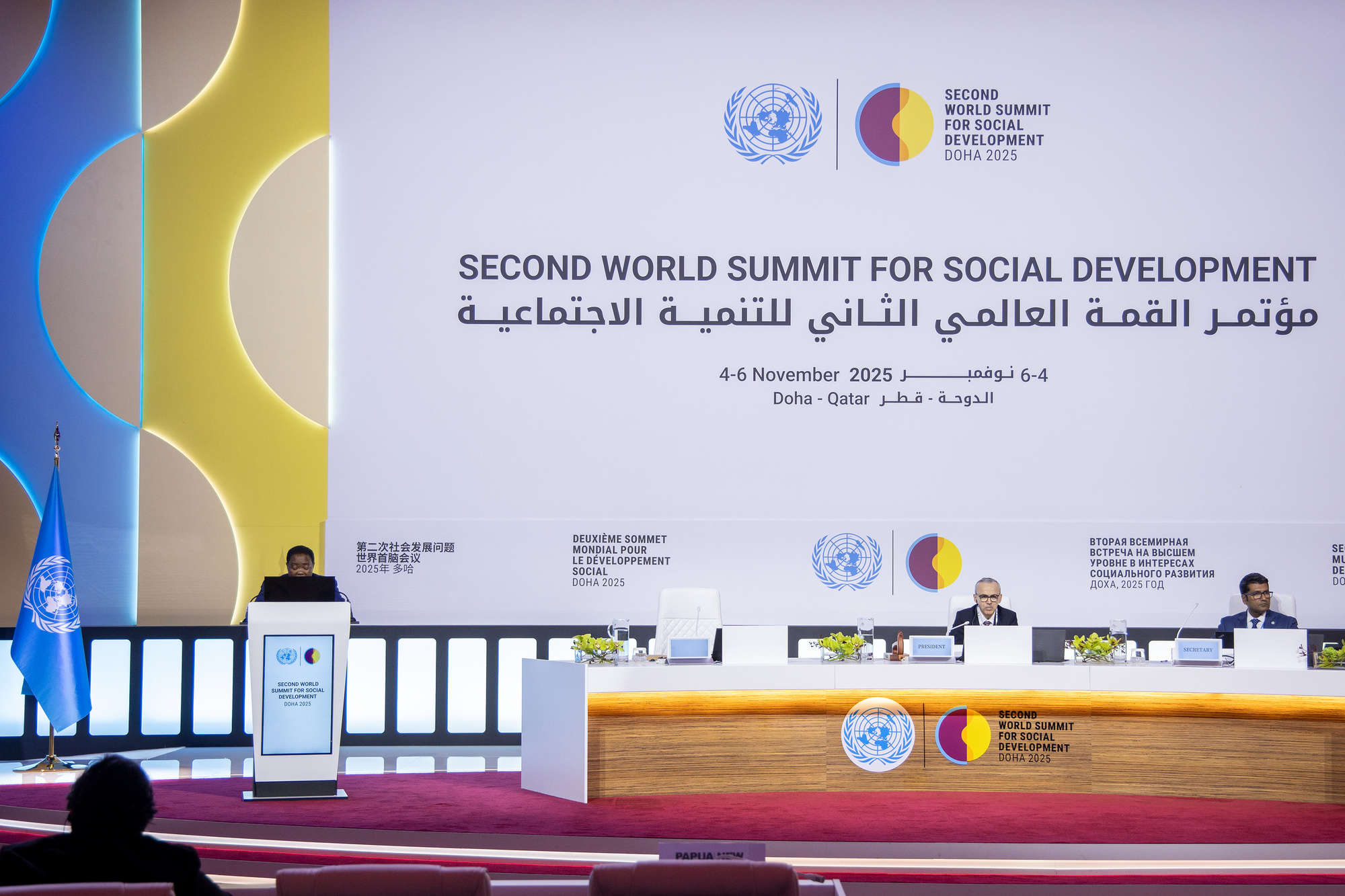
This was contained in the President’s message delivered for him by Rt. Hon. Robinah Nabbanja, Prime Minister of Uganda at the Second World Summit on social development in Doha, the capital of Qatar.
He said that Uganda was also prioritizing trade finance, investment, climate-smart agriculture, industrialization and value addition.
“Progress on the Sustainable Development Goals (SDGs) remains slow an “financing is a major trigger for sustainable economic transformation”, and we call for reform of the global financial architecture, particularly loan terms,” he observed.
The President stressed that the Summit came at a critical moment in global affairs following other key international engagements, including the 2023 SDG Summit and the 2024 Summit of the Future, where leaders reaffirmed shared commitment to shaping the world we want.
Museveni noted that the summit took place as the world was undergoing major structural reforms, with Official Development Assistance declining which should compel the developing countries to rethink their development approaches.
He briefed World leaders that Uganda had adopted a Tenfold-Growth Strategy aimed at expanding the economy from USD 61.3 billion currently to USD 500 billion by 2040.
The President called upon the United Nations and regional organisations, such as the African Union to continue to promote innovative initiatives and interventions that tackle poverty and improve household incomes.
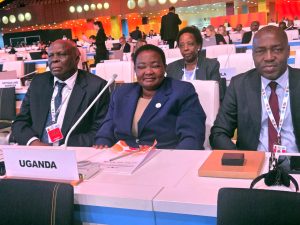
Rt. Hon. Robinah Nabbanja (Centre) attending the World Leader Conference Plenary
The summit was addressed by several Presidents, Heads of State from Africa, Europe, Asia-Pacific, Europe and America.
The first World Summit for Social Development conference was held in Copenhagen from 6–12 March 1995. It aimed to establish a people-centered framework for social development, to build a culture of cooperation and partnership and to respond to the immediate needs of those who are most affected by human distress.
As the Second World Summit for Social Development concluded in Doha 30 years after the first was held in Copenhagen, speakers shared national experiences to alternately showcase progress or appeal for assistance — both in service of urging the international community to fulfil the promises made in both cities
A call to action

The Session that was addressed by Rt. Hon. Nabbanja Robinah the Prime Minister of Uganda in Qatar Capital Doha
World leaders recommitted themselves to creating an enabling economic, political, social, cultural and legal environment to achieve social development for all and also adopt a holistic approach towards the eradication of poverty in all its forms and dimensions, including through addressing the challenges of extreme poverty and multidimensional poverty.
They also committed to address their disproportionate impact on countries in special situations and people in vulnerable situations and combat the feminization of poverty while ensuring that the focus is on building resilience to shocks and challenges, accelerating actions to eradicate poverty and avoiding relapsing back into it.
These efforts should include the elimination of hunger and malnutrition; the provision of social protection, food security, education, livelihoods, employment, decent work for all, clean water and sanitation, adequate shelter and reliable health systems; and participation in social and cultural life, with special priority given to the needs and rights of women and children and persons in vulnerable situations, who often bear the greatest burden of poverty.
They also agreed on Reinforcing international development cooperation for developing countries’ capacities to achieve poverty eradication, as well as the necessary measures to close financing gaps for poverty eradication and invest in capacity-building, technical assistance and programmes.
World leaders also agreed on Integrating quality education as a core component of poverty reduction strategies, with focused efforts on access, equity and inclusion within a lifelong learning approach.
Strengthening social protection systems and reinforcing investment in measures, promoting the integration of child-sensitive policies and programmes in national poverty eradication strategies, including social protection programmes that deliver an integrated package of essential services.
“We reiterate our commitment to the full implementation of the social development agenda, including through improving and strengthening its framework for international and regional cooperation, as established under the Copenhagen Declaration and Programme of Action and through following up on the Doha Political Declaration of the “World Social Summit” under the title “the Second World Summit for Social Development” the statement read in part.
The world leaders agreed to proceed to a five-year follow-up process on the Doha Political Declaration and the Copenhagen Declaration and Programme of Action, starting in 2031, to assess progress, identify gaps and renew the commitments, and convene a high-level plenary meeting under the auspices of the General Assembly, the modalities and outcome of which shall be decided no later than the eighty-fifth session of the Assembly.
End