By: Ismael Kasooha
KAMPALA
Prime Minister Rt. Hon. Nabbanja Robinah has assured the people of Kampala City that the government is committed to further develop the city to accommodate all people.
“By 1986, Kampala was in a bad state following several years of bad governance. Its population was less than one (01) million people, electricity access was below 20%, infrastructure was broken, and basic services had collapsed. Today, Kampala has been transformed into a vibrant, modern city and we continue to beautify it,” noted Nabbanja.
Nabbanja, who was presiding over the Kampala City Carnival after 7 years since the last one was held, said that the NRM government had decided to have such carnivals annually as one way of promoting Uganda as a tourist destination.
From Ghetto Youths to Vendors and school children and corporate executives, the crowd clearly showed the diverse population that makes up the city of originally seven hills which has expanded beyond.
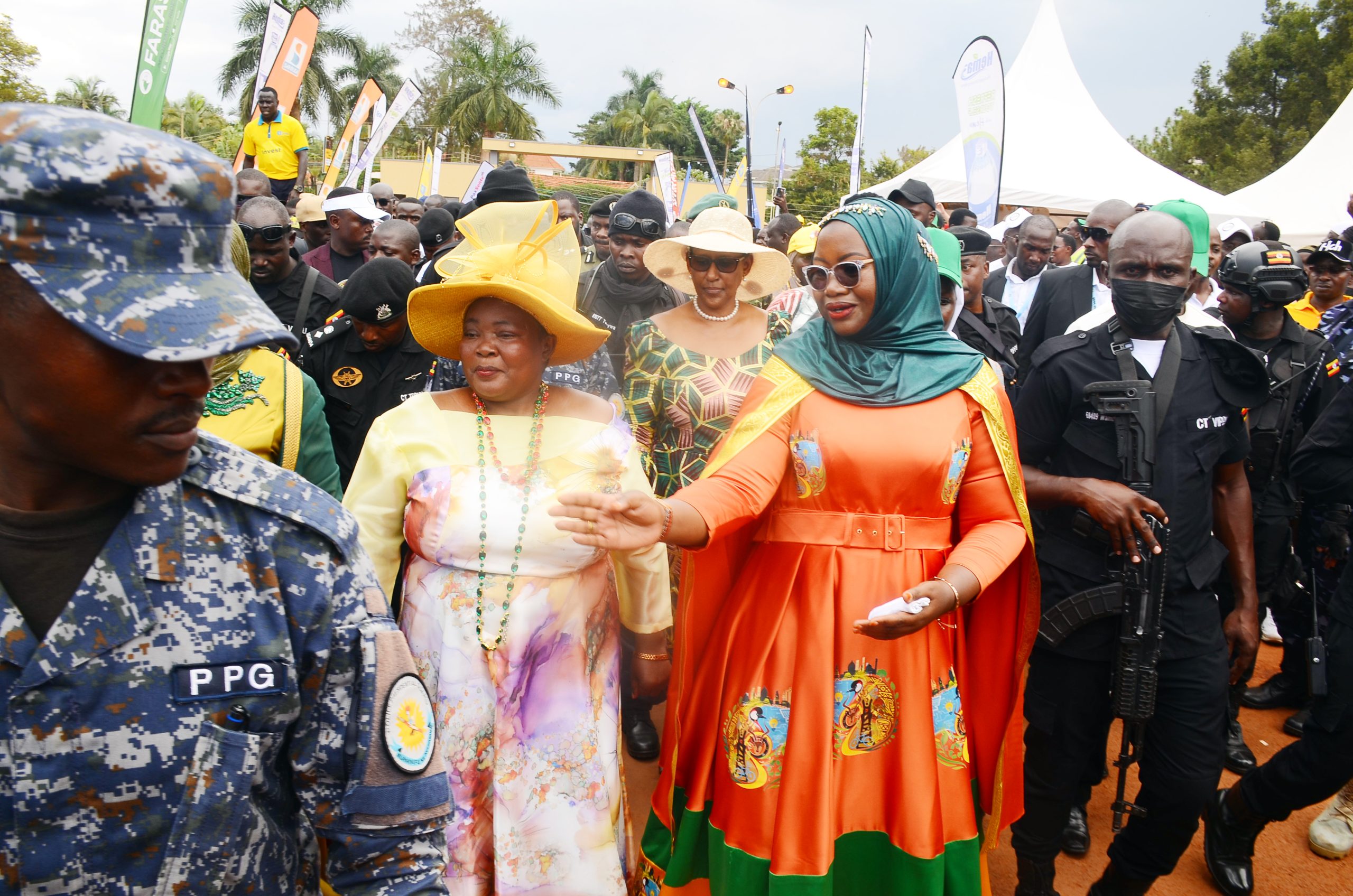
Prime Minister Rt. Hon. Nabbanja Robinah (with a hat) with Hajjat Sharifah Buzeki, (with green veil) the Executive Director KCCA walking hand-in-hand during the Festival at Kololo Independence grounds
“The theme for this year’s festival, “Innovation, Culture & Sustainability,” is both timely and relevant. It is in line with our Tenfold Growth Strategy. This theme encourages us to celebrate our progress, showcase our creativity, and reaffirm our shared commitment to building a vibrant, attractive, sustainable, and prosperous Kampala and Uganda,” Nabbanja emphasized.
The Premier told the gathering that Kampala was the face of Uganda’s transformation journey explaining that at Independence in 1962, it was a small town with less than 400,000 residents, less than 200 km of tarmacked roads, a limited electricity supply, and just one major hospital, Mulago.
She added that there were less than 30 Government schools with much of the city unplanned and economic activity had collapsed.
Currently, Kampala is home to 1.7 million people by night and 4.5 million people by day, and the city contributes 60% of Uganda’s GDP and the road network has expanded to 2,100 km, with 770 km tarmacked. She said that Electricity access nexceeds 75% with 78% of households having access to clean and safe water.
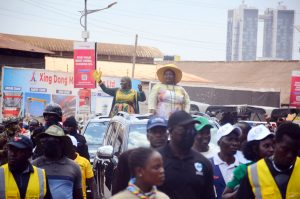
Prime Minister Rt. Hon. Nabbanja Robinah (with hat) with the Minister for Kampala Affairs Hajjat Minsa Kabanda (waving) during the Kampala Festival match in the city
Nabbanja said that Kampala currently has 79 Government Primary Schools and 23 Public Secondary Schools with Health facilities increased from one (01) major hospital (Mulago) to five (05) National Referral Hospitals and eight Health Centres.
“We have 18 government markets. Kampala also supports 78 private markets, with Owino Market alone employing 50,000 traders. These achievements have not come by accident. They are the fruits of a strong foundation laid by the NRM Government under the wise and steady leadership of H.E. the President,” noted Nabbanja.
The Premier attributed the enumerated achievements to the Peace and Security ushered in by the NRM government.
She said that the size of Uganda’s economy had expanded from a GDP of USD3.9 billion in 1986 to USD 61.3 billion today.
On roads Infrastructure, Nabbanja noted that the entire country had been connected by a network of tarmac roads.
Nabbanja noted that poverty levels had fallen from 56% in 1992 to 16.1% today and Life Expectancy of Ugandans had increased from 43 years in 1986 to 68 years today.

A young boy taking part in the Burundi traditional drumming during the Kampala Festival
She further highlighted that literacy rate had improved from 43% in 1986 to over 80% now, due to investments in UPE, USE, and tertiary education.
The Premier told the gathering that Households living in the subsistence economy had reduced from 90% in 1986 to 33% now.
The other achievement highlighted by Nabbanja was that Primary school enrolment had grown from 2 million pupils in 1996 to 8.8 million today, with 80% of parishes having government-aided primary schools across the country.
Talking of Electricity Generation, the Premier said that Power generation had increased from 60 megawatts in 1986 to 2,052 megawatts, with a target of 50 gigawatts by 2040.
She also underscore Government’s intervention of the Parish Development Model, where each of the 10,595 parishes had received UGX 300m, reaching 2.8 million families.
On her part, the Minister for Kampala Affairs. Hajjat Minsa Kabanda lauded the NRM government for the transformation of the City and pledged to always be available to serve the public. “We were appointed in these offices to serve you and we are ready at all times to offer the services you need to transform our city,” said Kabanda.
The Executive director Kampala Capital City Authority (KCCA), Hajjat Sharifah Buzeki pledged to work with all the people in Kampala to transform it. “We want to introduce electric buses to reduce traffic congestion in the city and also ensure all roads are motorable,” said Buzeki.
The festival was characterised by a match on the streets of Kampala to Kololo Independence grounds where the main event took place. Bikers, skaters, vintage cars and people of different calibers actively took part in the City carnival that ran till late in the night.
End